


Ottawa Seeks to Track Exit of Temporary Visas Holders
 www.theepochtimes.com
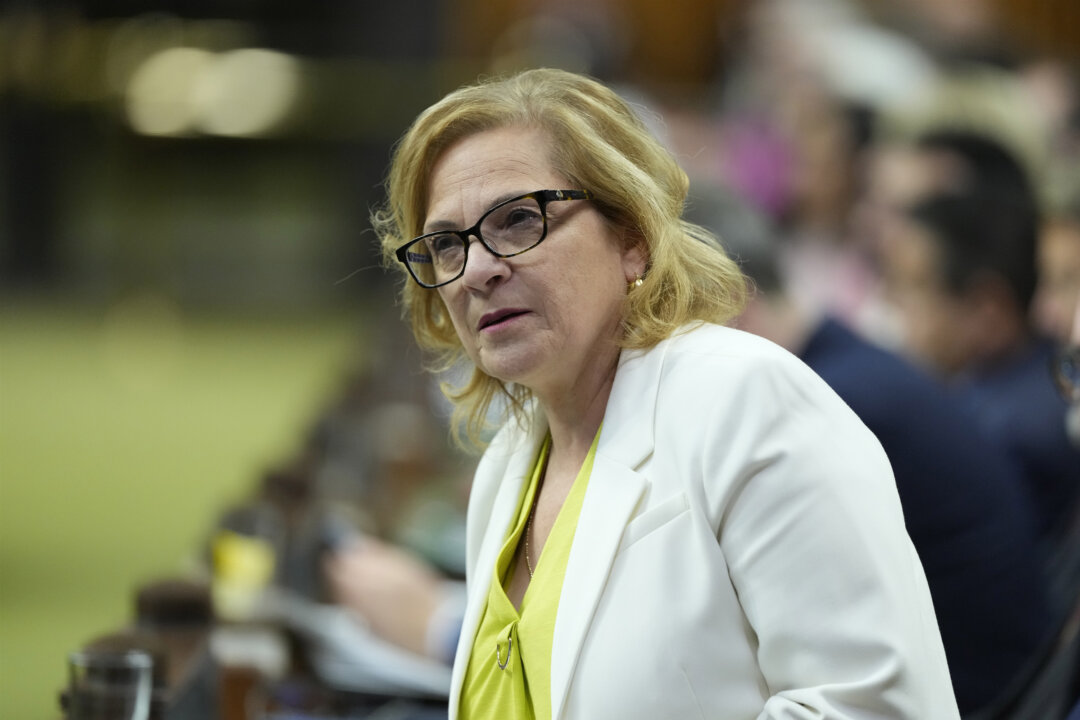
Removals of visa overstays don’t fall under the Ministry of Immigration.Immigration Minister Lena Diab says she wants her department to start tracking the number of people on temporary visas departing Canada.
Diab said there is currently no simple way for federal bodies such as the Canada Border Services Agency (CBSA) and Immigration, Refugees and Citizenship Canada (IRCC) to monitor the number of temporary residents leaving the country. She said she wants to change that with the help of digital tools.
“There’s a number [of] countries around the world that do track those. And I believe we need to also be doing that,” the minister told The Canadian Press in a recent phone interview. “Did we have the capabilities to do that before? No. Should we? I think yes, and that is something that you will see us working toward,” she said, as reported by the media outlet on Jan. 31.
Diab’s comment comes amid data from her department stating that nearly 1.9 million temporary visas, including work and student permits, will expire this year.
Last year, more than 2.5 million expired between Jan. 1 and July 31, says a response from her department to a Sept. 16 question submitted by Tory MP Pat Kelly, who asked for the number of temporary resident visas that had expired in 2025 thus far. “Please note that data more recent than July 31, 2025 has yet to be released,” the Nov. 5 response added.
The issue of whether Canada can track and remove people who have no legal right to be in the country has been debated at great length between the Liberal government and the Opposition Conservatives since last June. At the time, Tory MPs voiced concerns about temporary immigrants remaining in Canada after their visas had expired.
During House of Commons debates on June 9, 2025, Diab responded that the expectation is they would leave on their own and that removals are not within the purview of her department.
When Conservative MP Michelle Rempel Garner, the party’s immigration critic, countered that “they are not leaving the country, which is the problem,” and asked Diab how many of the 500,000 people on deportation orders announced in December 2024 had been removed, the minister did not directly respond, instead saying that the CBSA is in charge of removals.
Then last October, Aaron McCrorie, CBSA vice president of intelligence and enforcement, told the Commons citizenship and immigration committee that while the agency can track who is leaving Canada, their mode of travel, date of birth, and the travel documents they use, it cannot determine if someone is leaving because of an expired visa, however.
“Unfortunately, the systems aren’t designed in a way that allows us to do that analysis that I think you’re looking for at a systematic level. We can do it on a case-by-case basis, which is very labour-intensive, but we can’t do it at a systematic level,” McCrorie told the committee on Oct. 21, 2025.
Asylum Claims
IRCC data indicate that temporary resident visa holders accounted for a significant portion of asylum claims across a six-year period.
On Jan. 26, the department responded to a written request by Rempel Garner in early November seeking data on these claims, including the numbers received, approved, and rejected since January 2020, broken down by year and groupings such as the original purpose of entry, the country of origin, and the type of claimed persecution.
The department provided figures for the period between Jan. 1, 2020, and Sept. 30, 2025. According to the figures, at the peak in 2024, IRCC received 190,485 asylum claims in total, among which temporary resident visa holders accounted for nearly 59 percent (112,215) while study permit holders made up around 11 percent (21,750).
That year, the federal government approved 46,475 claims in total, among which 14 percent were from people on temporary resident visas and 20 percent were from people with study permits.
Minister Diab said in the recent interview with The Canadian Press that her government has sought to curb the growth in asylum claims through Bill C-12, also known as Strengthening Canada’s Immigration System and Borders Act. The legislation, currently before the Senate, aims to make it more difficult to make an asylum claim if the individual in question has been in Canada for more than one year.
She also touted the Liberals’ recent effort to cut back on immigration admission rates.
Budget 2025, announced this past November, states that the government’s 2026–28 Immigration Levels Plan will “stabilise” the permanent resident admission targets at 380,000 per year for the three years, which is down from 395,000 in 2025. By comparison, the target for 2024 was 485,000, which saw a total of 483,640 immigrants admitted as permanent residents.
As well, Budget 2025 stated that the new immigration levels plan will reduce the target for new temporary resident admissions from 673,650 in 2025 to 385,000 in 2026 and to 370,000 in 2027 and 2028. Publicly available IRCC data on temporary resident arrivals says a combined 305,000 workers and students arrived between Jan. 1 and Nov. 30, 2025.
Diab said the policy changes are part of her government’s plan to restore public confidence in Canada’s immigration system. She added that her department is piloting new online immigration services, including one that provides a limited number of passport renewals and another that offers digital visas to some international travellers.
Upvote
10