US Lawmakers Warn Canada Against Allowing ‘Beijing a Foothold in the North American Auto Market’.
The U.S. House Select Committee on China is warning Canada that it should reconsider opening its auto industry to Beijing and risking thousands of jobs, ahead of the upcoming renewal negotiations for the United States-Mexico-Canada Agreement (USMCA).
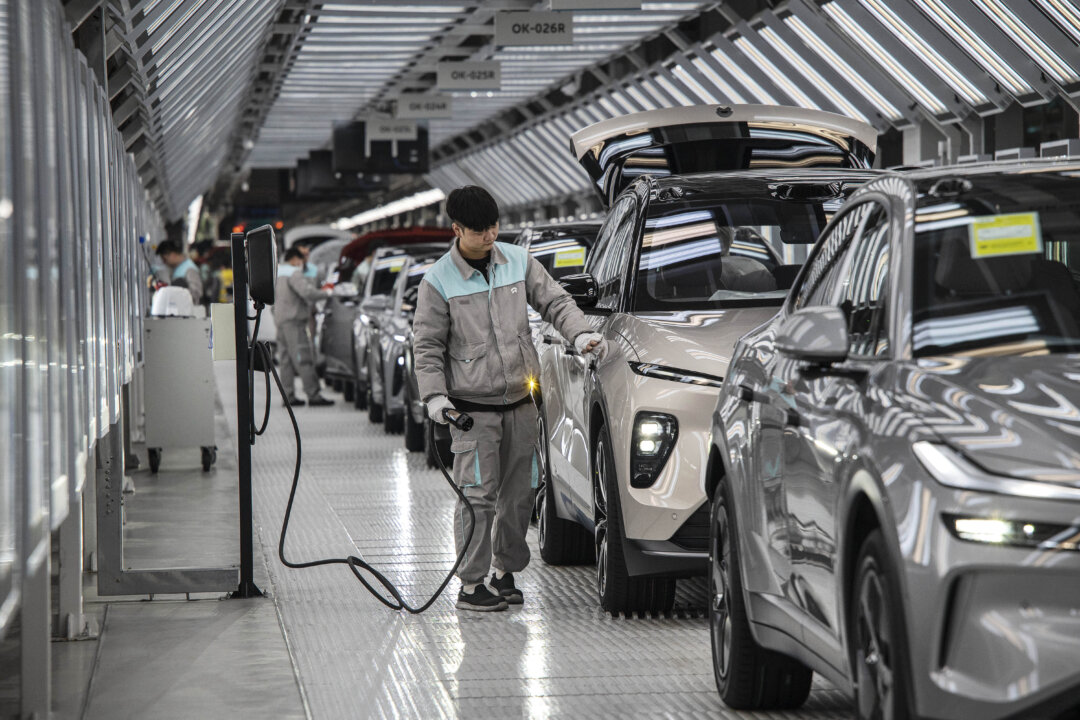
By opening its market to Chinese electric vehicles (EVs), Canada risks distorting its auto industry by giving “Beijing a foothold in the North American auto market, threatening thousands of jobs and undermining a century of integrated automotive leadership,” the committee said in a Jan. 16
post on X.
“China’s state-subsidized overcapacity has already distorted Europe’s auto industry, and North America will be next if this precedent stands,” the committee said.
“At a critical moment for USMCA renewal negotiations, Canada should reconsider and work with the United States and Mexico to strengthen, not weaken, North American industry.”
Prime Minister Mark Carney concluded his
visit to China last week by announcing that Canada will
remove its 100 percent tariff on up to 49,000 Chinese EVs, which will instead be tariffed under the “most-favoured nation” tariff rate of 6.1 percent.
Canada had imposed the 100 percent tariff on Chinese EVs in late 2024 under the former Liberal government of Prime Minister Justin Trudeau, following similar measures implemented by the Biden administration, in an effort to boost the domestic production of EVs. China retaliated in March 2025 by targeting Canadian agricultural and seafood products.
As part of the new deal with Beijing, the Prime Minister’s Office (PMO)
said it a Jan. 16 news release that it expects China to lower tariffs on Canadian canola from 85 percent to 15 percent, from March 1 “until at least the end of this year.” Tariffs on other agricultural and seafood products are also expected to be cut for at least one year, the PMO said.
Conservative Leader Pierre Poilievre
criticized the removal of tariffs on Chinese EVs, citing concerns over security and Canadians’ jobs in the auto sector.
Carney’s break with the United States on Chinese EVs came a few days after an
editorial published by Chinese Communist Party media outlet
said Ottawa needs to distance itself from Washington if it wants closer ties with Beijing.
Meanwhile, U.S. President Donald Trump
told reporters on Jan. 16 that it’s “OK” Carney is making deals with Beijing, adding that this is “what he should be doing.”
“It’s a good thing for him to sign a trade deal. If he can get a deal with China, he should do that,” Trump said.
However, Trump’s transport secretary, Sean Duffy, said Canada will regret its decision to partner with Beijing and bring Chinese EVs into its market. “I love my friends in Canada, but they will live to regret the day they let the Chinese Communist Party flood the market with their EVs!” Duffy said in a Jan. 17
post on X.
U.S. Trade Representative Jamieson Greer made similar
comments to CNBC on Jan. 16, saying Canada will likely regret the deal it made on allowing nearly 50,000 Chinese EVs into the Canadian market.
“I think it’s problematic for Canada,” Greer said, adding that the reason the United States imposed tariffs on Chinese EVs was to protect autoworkers. He said Canada was seeking relief for its agricultural products but that in the “long run, they’re not going to like having made that deal.”





 www.ctvnews.ca